top of page

Research Overview
The Scherman Group is made up of a diverse mix of scientists. We are comprised of individuals with a range of backgrounds from chemists to pharmacists, engineers and biologists.
Our team embraces non-traditional approaches to push towards scientific breakthroughs. Led by the most exciting and meaningful science, we cover a broad range of topics and possess diverse expertise. At the core of the group lies control and molecular-level understanding of dynamic interactions. This fundamental concept manifests itself in numerous ways across the group's research portfolio.
We continuously seek out exciting and innovative ways to advance our understanding of our systems, often driven by real-world applications and need. Collaboration is an integral part of our ethos and we firmly believe that through collaboration, inclusivity, diversity, and curiosity, we are poised to conduct world-leading research with tangible real-world applications.
The Scherman Group is an exciting place to be, fostering an environment where each member can carve out their own research niche and flourish as independent researchers. Simultaneously, we encourage the sharing of expertise and insights among group members, accelerating and elevating their research endeavors.
Core Research Areas
Small molecule chemistry

Cucurbit[n]urils, CB[n]s, are an exciting class of macrocyclic hosts that have been extensively studied in the field of supramolecular chemistry due to their superior binding properties. CB[n]s have been used as molecular receptors for a wide range of guest molecules, including ions, small organic molecules, peptides, drug molecules and proteins.
Polymer chemistry

We have developed functional polymeric materials that can undergo self-assembly to yield dynamic materials with a range of tunable properties. These range from functionalised biocompatible polymers through to functional monomers that yield dynamic high performance polymeric materials. Molecular level tuning of the mechanical properties enables applications in drug delivery and bioelectronics.
Colloidal chemistry

We study the organisation of colloidal particles into ordered structures mediated by supramolecular interactions. The self-assembly process occurs due to interparticle interactions, leading to the formation of ordered structures. Colloidal self-assembly has applications in the fields of materials science, biotechnology, and nanotechnology, as it enables the fabrication of functional materials with well-defined structures and properties.
Hybrid organic-inorganic materials

Hybrid materials are composed of two or more distinct components which are combined to produce a new material with properties that cannot be achieved by the individual components alone. Combining different materials can result in synergistic effects that lead to improved mechanical, electrical, thermal, and optical properties. Hybrid materials have a wide range of applications in various fields, such as energy storage, catalysis, sensing, and electronics.
Wider Research Areas
Stimuli responsive systems

We are interested in the design of systems that can change their physical or chemical properties in response to specific stimuli, such as temperature, light, magnetic field, pH, or ionic strength. By designing new stimuli-responsive systems, we aim to improve the efficiency and performance of existing materials and devices, and develop new and innovative applications that can respond to environmental stimuli.
Surface chemistry

The spontaneous binding between CB[n] and metal surfaces is hypothesised to arise from electrostatic forces between the carbonyl portals of CB[n] and the metallic surface (type I). In addition, CB[n] can be localised at interfaces through interactions with immobilised guests on surfaces (type II), or bycovalently linking functionalised homologues of CB[n] directly to a surface (type III). We have explored a variety of these interactions to create both sensing and detection platforms as well as control nano assemblies.
Polymer network dynamics

Understanding polymer network dynamics has profound implications in addressing challenges and optimising the performance of materials across a wide spectrum of applications and designing materials with specific functional properties. For instance, in drug delivery, controlling the release rate of therapeutic agents depends on how the polymer network interacts with its environment. Insights into network dynamics can help address concerns, such as the recyclability and biodegradability of polymers.
SERS-active assemblies

We have shown the ability of CB[8] to create precise subnanometer junctions between AuNPs while its cavity simultaneously traps small molecules which enables their reproducible surface-enhanced Raman spectroscopy (SERS) detection. Explicit shifts in the SERS frequencies of CB[8] on complexation with guest molecules provides a direct strategy for absolute quantification of a range of molecules down to nM - μM levels. This provides a new analytical paradigm for quantitative SERS of small molecules.
Bespoke experimental setups
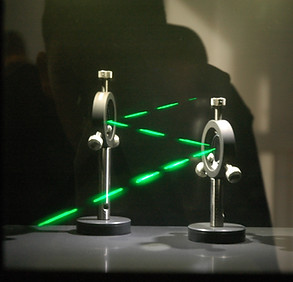
We have recently built a state-of-the-art experimental set up which we call CAM-RIG. It couples real-time rheology with super resolution microscopy to enable us to gain both spatial and temporal information simultaneously. We are using CAM-RIG to interrogate the dynamic interactions within our materials and systems in real-time to unviel information on the time and length scales of these interactions that are simply unseen using traditional experimental techniques. We believe that these insights will be invaluable to the design and realisation of next generation of materials and will aid the advent of true, autonomous material design.
bottom of page